


When it comes to powder screening in various industries, the Linear Vibration Screen has emerged as a popular choice due to its efficiency and versatility. As a supplier of Linear Vibration Screens, I have witnessed firsthand the benefits it offers in separating particles of different sizes. However, like any technology, it also comes with its own set of challenges. In this blog post, I will delve into the key challenges that users may encounter when using a Linear Vibration Screen for powder screening.
1. Screen Blockage
One of the most common challenges in powder screening with a Linear Vibration Screen is screen blockage. Powders, especially those with irregular shapes or high moisture content, can easily clog the screen openings. When the screen is blocked, the screening efficiency drops significantly, and the throughput of the machine is reduced. This can lead to production delays and increased maintenance costs.
There are several reasons for screen blockage. Fine powders may adhere to the screen surface due to electrostatic forces or moisture. Powders with a high aspect ratio, such as flakes or fibers, can get stuck in the screen openings. Additionally, if the powder has a tendency to agglomerate, the agglomerates can block the screen.
To address this issue, we offer Linear Vibration Sifters equipped with anti - blockage devices. For example, ultrasonic cleaning systems can be integrated into the screen to break up the agglomerates and prevent powder from adhering to the screen. Another solution is to use a self - cleaning screen design, where the vibration of the screen itself helps to dislodge the blocked particles.
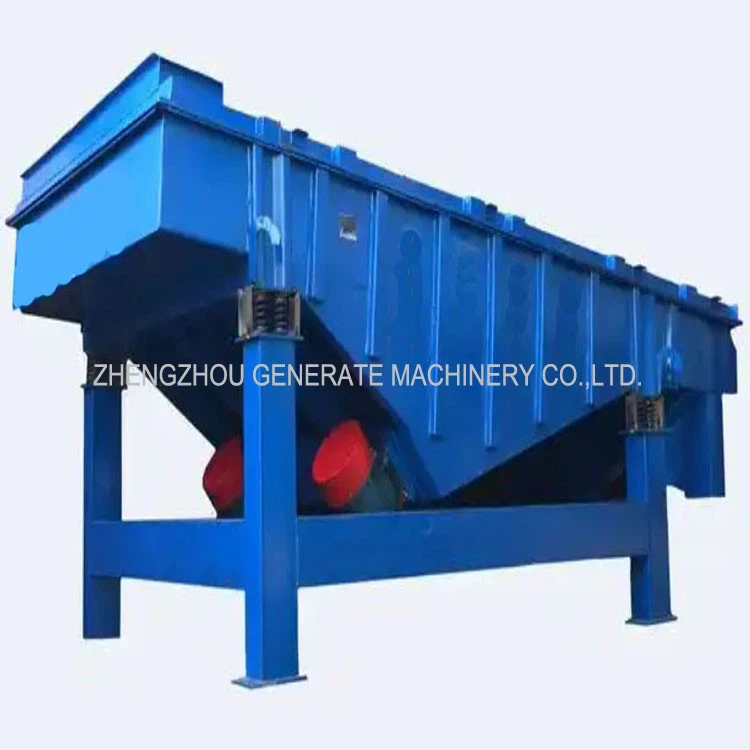

2. Dust Emission
Powder screening operations often generate a significant amount of dust. This is not only a health hazard for the operators but also a potential environmental concern. In a Linear Vibration Screen, the vibration of the screen and the movement of the powder can cause dust to escape into the surrounding environment.
Dust emission can be a challenge to control, especially when dealing with fine powders. Traditional dust collection systems may not be sufficient to capture all the dust, and the fine particles can easily bypass the filters. Moreover, if the screen is not properly sealed, dust can leak out from the edges of the screen.
As a supplier, we understand the importance of dust control. Our Linear Vibrating Sieves are designed with sealed structures to minimize dust leakage. We also offer optional dust collection systems that are specifically designed for powder screening applications. These systems use high - efficiency filters to capture the fine dust particles and ensure a clean working environment.
3. Uneven Screening
Achieving uniform screening across the entire width of the screen is another challenge in powder screening with a Linear Vibration Screen. In some cases, the powder may not spread evenly on the screen, leading to uneven screening results. This can result in some areas of the screen being overloaded while others are underutilized.
Uneven screening can be caused by several factors. The feeding method of the powder can play a crucial role. If the powder is not fed evenly onto the screen, it will not spread uniformly. The vibration characteristics of the screen also affect the distribution of the powder. If the vibration is not properly adjusted, the powder may not move smoothly across the screen.
To overcome this challenge, we provide customized feeding systems for our Linear Vibration Screens. These feeding systems are designed to ensure a uniform flow of powder onto the screen. We also offer adjustable vibration parameters, allowing the users to optimize the vibration intensity and frequency to achieve the best screening results.
4. Wear and Tear
The continuous vibration and the movement of the powder can cause significant wear and tear on the components of the Linear Vibration Screen. The screen mesh, in particular, is prone to damage due to the abrasion caused by the powder particles. Over time, the screen mesh may develop holes or tears, which can affect the screening accuracy.
Other components such as the vibration motors, springs, and bearings also experience wear and tear. If these components are not properly maintained, they can fail, leading to downtime and costly repairs.
To minimize wear and tear, we use high - quality materials in the construction of our screens. The screen mesh is made of wear - resistant materials such as stainless steel or polyurethane. We also provide regular maintenance schedules and offer replacement parts to ensure the long - term reliability of our Linear Vibration Screens.
5. Difficulty in Screening High - Density Powders
High - density powders pose a unique challenge in screening. These powders have a greater mass per unit volume, which means they require more energy to be moved and separated on the screen. In a Linear Vibration Screen, the vibration may not be sufficient to overcome the gravitational force and the inter - particle forces of high - density powders.
As a result, the screening efficiency of high - density powders may be lower compared to low - density powders. The powders may also tend to accumulate on the screen, leading to blockage and reduced throughput.
To address this issue, we have developed specialized Linear Vibration Screens for high - density powder screening. These screens are equipped with more powerful vibration motors and optimized vibration parameters to provide the necessary energy for screening high - density powders.
Conclusion
While the Linear Vibration Screen is a powerful tool for powder screening, it is not without its challenges. Screen blockage, dust emission, uneven screening, wear and tear, and difficulty in screening high - density powders are some of the common issues that users may face. However, as a supplier, we are committed to providing solutions to these challenges. Our Linear Vibration Sifters, Linear Vibrating Sieves, and Linear Vibration Screens are designed with advanced features and technologies to ensure efficient and reliable powder screening.
If you are facing any of these challenges in your powder screening operations or are interested in learning more about our products, we invite you to contact us for a consultation. Our team of experts will be happy to discuss your specific requirements and help you find the best solution for your needs.
References
- Perry, R. H., & Green, D. W. (Eds.). (2008). Perry's Chemical Engineers' Handbook. McGraw - Hill.
- Svarovsky, L. (1990). Solid - Liquid Separation. Butterworth - Heinemann.