


As a provider of Lab Vibro Sifters, I often encounter inquiries regarding the suitability of our equipment for sieving magnetic materials. This blog post aims to comprehensively explore this topic, providing in - depth analysis and practical insights to help you make informed decisions.
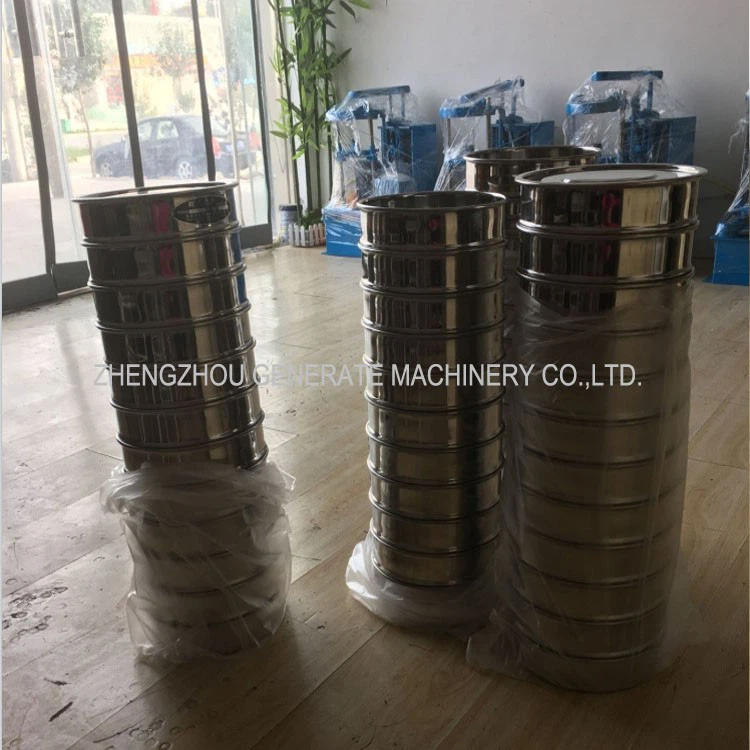

Understanding Lab Vibro Sifters
Before delving into the question of using Lab Vibro Sifters for magnetic materials, it's essential to understand what a Lab Vibro Sifter is. A Lab Vibro Sifter is a precision instrument designed for laboratory - scale sieving operations. It uses vibration to separate particles based on their size, ensuring accurate and repeatable results. These sifters are commonly used in industries such as pharmaceuticals, food, chemicals, and minerals for quality control, research and development, and product testing.
The basic working principle of a Lab Vibro Sifter involves a motor that generates vibrations, which are transferred to the sieve mesh. The vibrations cause the particles to move across the mesh, with smaller particles passing through the openings while larger ones remain on the sieve. This process allows for the efficient separation of different particle sizes.
Characteristics of Magnetic Materials
Magnetic materials possess unique properties that set them apart from non - magnetic substances. These materials can be attracted to a magnet and may exhibit ferromagnetism, paramagnetism, or diamagnetism. Ferromagnetic materials, such as iron, nickel, and cobalt, have strong magnetic properties and can be easily magnetized. Paramagnetic materials have a weak attraction to magnetic fields, while diamagnetic materials are weakly repelled by magnetic fields.
The magnetic nature of these materials can pose challenges when it comes to sieving. For example, ferromagnetic particles may clump together due to magnetic attraction, making it difficult to achieve accurate particle separation. Additionally, the magnetic field can interfere with the normal operation of the sieve, potentially causing uneven distribution of particles on the mesh.
Can a Lab Vibro Sifter be Used for Magnetic Materials?
The short answer is yes, a Lab Vibro Sifter can be used for magnetic materials, but several factors need to be considered to ensure optimal performance.
1. Particle Size and Magnetic Strength
The size of the magnetic particles plays a crucial role in the sieving process. Smaller magnetic particles are more likely to clump together due to their higher surface - to - volume ratio, which increases the magnetic interaction between them. In contrast, larger particles may be less affected by magnetic forces.
The strength of the magnetism also matters. Highly ferromagnetic materials with strong magnetic properties may require additional measures to prevent clumping. For instance, if the magnetic force is too strong, the particles may stick to the sieve mesh, reducing the efficiency of the sieving process.
2. Sieve Mesh Material
The choice of sieve mesh material is important when dealing with magnetic materials. Non - magnetic materials such as stainless steel are often preferred because they do not interact with the magnetic particles. Using a magnetic sieve mesh can cause the magnetic particles to adhere to the mesh, leading to clogging and inaccurate results.
3. Vibration Settings
Adjusting the vibration settings of the Lab Vibro Sifter is essential for sieving magnetic materials. Higher vibration amplitudes and frequencies can help break up the clumps of magnetic particles and ensure a more even distribution on the sieve. However, excessive vibration can also cause the particles to bounce off the sieve or damage the equipment, so finding the right balance is crucial.
4. Anti - Clumping Measures
To overcome the issue of particle clumping, additional anti - clumping measures can be implemented. One approach is to use a de - agglomeration device, which can break up the clumps before they reach the sieve. Another option is to add a non - magnetic additive to the material to reduce the magnetic interaction between the particles.
Advantages of Using a Lab Vibro Sifter for Magnetic Materials
Despite the challenges, there are several advantages to using a Lab Vibro Sifter for magnetic materials.
1. Accurate Particle Separation
When the appropriate measures are taken, a Lab Vibro Sifter can provide accurate particle separation for magnetic materials. This is crucial for quality control in industries where the particle size distribution of magnetic materials can affect the performance of the final product.
2. Versatility
Lab Vibro Sifters are versatile instruments that can be used for a wide range of materials, including magnetic ones. This makes them a cost - effective solution for laboratories that need to sieve different types of materials.
3. Repeatability
The consistent vibration mechanism of a Lab Vibro Sifter ensures repeatable results. This is important for research and development purposes, where accurate and reproducible data are essential.
Applications of Lab Vibro Sifters for Magnetic Materials
There are several industries where the sieving of magnetic materials using a Lab Vibro Sifter is relevant.
1. Electronics
In the electronics industry, magnetic materials are used in the production of components such as transformers, inductors, and magnetic sensors. Sieving these materials helps ensure the proper particle size distribution, which is critical for the performance and reliability of the electronic devices.
2. Mining and Minerals
Magnetic materials are often found in mining operations, and sieving is an important step in the processing of these materials. A Lab Vibro Sifter can be used to separate different particle sizes of magnetic minerals, which is essential for further processing and refining.
3. Pharmaceuticals
In the pharmaceutical industry, magnetic materials may be used in drug delivery systems or as excipients. Sieving these materials using a Lab Vibro Sifter can help ensure the quality and uniformity of the pharmaceutical products.
Case Studies
Let's look at some real - world examples of using a Lab Vibro Sifter for magnetic materials.
A research laboratory was working on developing a new magnetic sensor. They needed to sieve a ferromagnetic powder to obtain particles of a specific size range. By using a Lab Test Vibrating Screen with a stainless - steel sieve mesh and adjusting the vibration settings, they were able to achieve accurate particle separation. The de - agglomeration device was also used to break up the clumps of magnetic particles, resulting in high - quality samples for further testing.
Another case involved a mining company that was processing magnetic iron ore. They used a Test Vibration Sieve to analyze the particle size distribution of the ore. By carefully selecting the sieve mesh and optimizing the vibration parameters, they were able to obtain reliable data, which helped in improving the efficiency of the ore processing.
Conclusion
In conclusion, a Lab Vibro Sifter can be effectively used for magnetic materials, provided that the appropriate precautions and adjustments are made. By considering factors such as particle size, magnetic strength, sieve mesh material, vibration settings, and anti - clumping measures, accurate and efficient sieving can be achieved.
The versatility and repeatability of Lab Vibro Sifters make them a valuable tool for industries that deal with magnetic materials. Whether it's for quality control, research and development, or product testing, these sifters can provide reliable results.
If you are interested in using a Lab Vibro Sifter for your magnetic material sieving needs, we are here to help. Our team of experts can provide you with customized solutions and technical support. Contact us to start a discussion about your specific requirements and explore how our Lab Vibro Sifters can meet your needs.
References
- ASTM International. (Year). Standard test methods for particle size analysis of powders.
- Smith, J. (Year). Handbook of Magnetic Materials.
- Industrial Sieving and Screening Association. (Year). Best practices for sieving magnetic materials.