


Hey there! As a supplier of Single Screw Extruders, I've seen firsthand how crucial it is to understand the flow behavior of materials in these machines. It's not just about getting the stuff from point A to point B; it's about making sure the end product meets the highest quality standards. So, let's dive into how you can study the flow behavior of materials in a single screw extruder.
Why Study Flow Behavior?
First off, you might be wondering why it's so important to study the flow behavior. Well, it directly affects the quality of your final product. If the material doesn't flow evenly through the extruder, you could end up with products that have inconsistent properties, like uneven thickness or strength. This can lead to a whole bunch of issues, from product failures to unhappy customers.
Understanding the flow behavior also helps you optimize the extrusion process. You can adjust things like screw speed, temperature, and pressure to get the best results. This not only improves product quality but also increases efficiency and reduces waste.
Getting Started: Know Your Materials
The first step in studying the flow behavior of materials in a single screw extruder is to understand the materials you're working with. Different materials have different properties, such as viscosity, density, and melting point, which can all affect how they flow through the extruder.
For example, plastics are one of the most commonly extruded materials. There are many different types of plastics, each with its own unique properties. Some plastics are more viscous than others, which means they flow more slowly through the extruder. Others have a lower melting point, which means they can be processed at lower temperatures.
To get a better understanding of your materials, you can perform some basic tests. For example, you can measure the viscosity of the material using a viscometer. This will give you an idea of how easily the material flows. You can also measure the melting point of the material using a differential scanning calorimeter (DSC). This will help you determine the optimal processing temperature for the material.
The Role of the Single Screw Extruder
Now that you know your materials, it's time to take a closer look at the single screw extruder itself. The single screw extruder is a simple yet effective machine that consists of a screw inside a barrel. The screw rotates inside the barrel, pushing the material forward and melting it as it goes.
The design of the screw plays a crucial role in the flow behavior of the material. There are many different types of screws, each with its own unique design and function. For example, some screws are designed to have a high compression ratio, which means they can compress the material more effectively. Others are designed to have a more gentle compression ratio, which is better for materials that are more sensitive to shear.

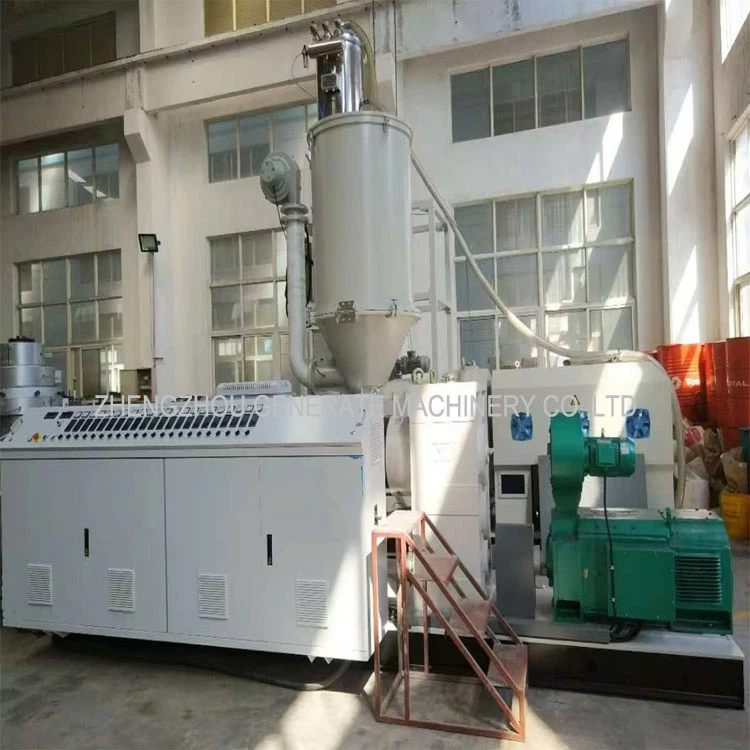
The barrel of the extruder also plays an important role in the flow behavior of the material. The barrel is usually heated to a specific temperature to melt the material. The temperature of the barrel can affect the viscosity of the material, which in turn can affect how it flows through the extruder.
Measuring Flow Behavior
Once you have a good understanding of your materials and the single screw extruder, it's time to start measuring the flow behavior of the material. There are several different methods you can use to measure the flow behavior, each with its own advantages and disadvantages.
One common method is to use a capillary rheometer. A capillary rheometer measures the pressure drop across a small capillary tube as the material is forced through it. This allows you to calculate the viscosity of the material at different shear rates. The viscosity of the material is an important parameter that can affect how it flows through the extruder.
Another method is to use a torque rheometer. A torque rheometer measures the torque required to rotate a screw in a barrel filled with the material. This allows you to measure the shear stress and shear rate of the material as it flows through the extruder. The shear stress and shear rate are important parameters that can affect the mixing and melting of the material in the extruder.
Analyzing the Data
Once you have collected the data on the flow behavior of the material, it's time to analyze it. There are several different techniques you can use to analyze the data, depending on the type of data you have collected.
One common technique is to use a mathematical model to describe the flow behavior of the material. There are many different types of mathematical models, each with its own assumptions and limitations. For example, the power-law model is a simple model that can be used to describe the flow behavior of many materials. The power-law model assumes that the viscosity of the material is proportional to the shear rate raised to a power.
Another technique is to use a statistical analysis to identify trends and patterns in the data. For example, you can use a regression analysis to determine the relationship between the viscosity of the material and the shear rate. This can help you predict how the material will flow through the extruder under different conditions.
Optimizing the Extrusion Process
Once you have analyzed the data on the flow behavior of the material, it's time to use this information to optimize the extrusion process. There are several different parameters you can adjust to optimize the process, such as screw speed, temperature, and pressure.
For example, if you find that the material is not flowing evenly through the extruder, you can try increasing the screw speed. This will increase the shear rate of the material, which can help to improve its flow behavior. You can also try adjusting the temperature of the barrel. If the material is too viscous, you can try increasing the temperature to reduce its viscosity.
It's important to note that optimizing the extrusion process is an iterative process. You may need to make several adjustments to the process parameters before you achieve the desired results. It's also a good idea to keep a record of the changes you make and the results you achieve. This will help you to learn from your experience and make better decisions in the future.
Conclusion
Studying the flow behavior of materials in a single screw extruder is an important step in optimizing the extrusion process and ensuring the quality of your final product. By understanding your materials, the role of the single screw extruder, and how to measure and analyze the flow behavior, you can make informed decisions about the process parameters and achieve the best results.
If you're in the market for a Single Screw Extruder Machine, Single Screw Extruder, or Plastic Single Screw Extruder, we're here to help. We offer a wide range of high-quality extruders that are designed to meet the needs of different applications. If you have any questions or would like to discuss your requirements, feel free to get in touch for a procurement negotiation. We look forward to hearing from you!
References
- Tadmor, Z., & Klein, I. (1970). Engineering Principles of Polymer Processing. Wiley-Interscience.
- Rauwendaal, C. (2001). Polymer Extrusion. Hanser Publishers.