


As a supplier of rotary vibrating screens, I've witnessed firsthand the intricate relationship between the particle shape of materials and the screening performance of these machines. In this blog, I'll delve into how different particle shapes affect the screening process of a rotary vibrating screen and why understanding this is crucial for optimal performance.
Understanding Rotary Vibrating Screens
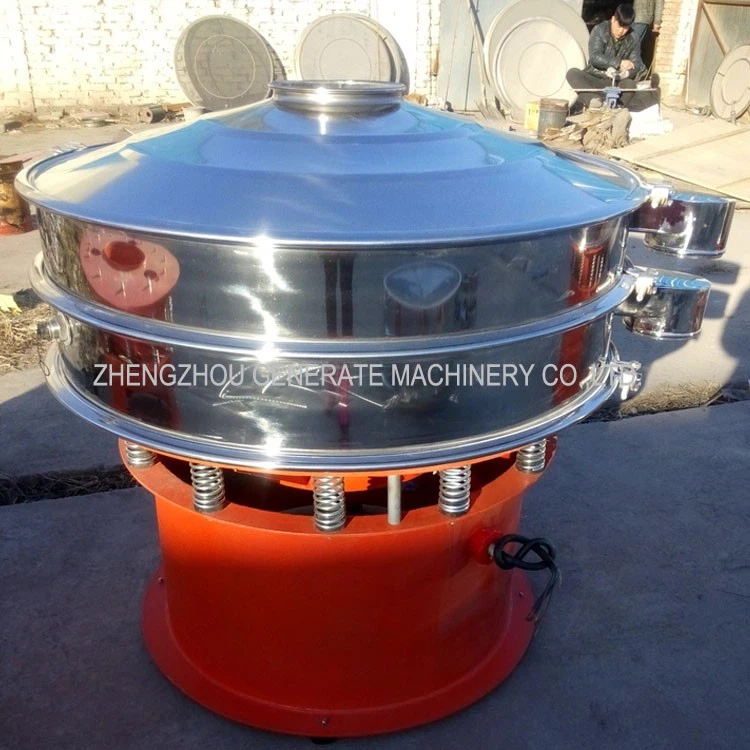
Before we explore the impact of particle shape, let's briefly understand what a rotary vibrating screen is. A Rotary Vibration Sieve is a highly efficient screening device widely used in various industries such as food, chemical, pharmaceutical, and metallurgy. It operates by generating a three - dimensional vibration, which allows materials to move in a circular path on the screen surface, facilitating the separation of particles based on their size. The Rotary Vibration Screen and Rotary Vibrating Sieve are essentially the same type of equipment with different naming conventions in some regions.
Effects of Different Particle Shapes on Screening Performance
Spherical Particles
Spherical particles are often considered the ideal shape for screening. Their symmetrical nature allows them to roll and move smoothly on the screen surface. When passing through a rotary vibrating screen, spherical particles have a higher probability of aligning with the screen openings. This alignment enables them to pass through the screen more easily, resulting in a higher screening efficiency.
For example, in the pharmaceutical industry, when screening spherical drug granules, the rotary vibrating screen can achieve a high throughput rate. The spherical shape reduces the likelihood of particles getting stuck in the screen openings, minimizing the occurrence of blockages and ensuring a continuous and efficient screening process.
Cubic Particles
Cubic particles also have relatively good screening performance. They have well - defined edges and flat faces, which can interact with the screen surface in a predictable manner. Similar to spherical particles, cubic particles can roll and slide on the screen, and their regular shape allows them to fit through the screen openings when properly oriented.

However, compared to spherical particles, cubic particles may require a slightly longer time to align with the screen openings. This is because they have more distinct orientations, and the chances of them being in an unfavorable orientation are relatively higher. Nevertheless, in general, a rotary vibrating screen can still achieve a satisfactory screening result for cubic particles.
Irregularly Shaped Particles
Irregularly shaped particles pose the greatest challenge to the screening process. These particles can have jagged edges, protrusions, or complex geometries. When passing through a rotary vibrating screen, irregularly shaped particles are more likely to get stuck in the screen openings. Their non - uniform shape makes it difficult for them to align with the screen, and they may wedge themselves into the holes, causing blockages.
In the mining industry, for example, when screening ores with irregular shapes, the screening efficiency of a rotary vibrating screen can be significantly reduced. The blockages not only slow down the screening process but also increase the wear and tear on the screen mesh, shortening its service life.
Fibrous Particles
Fibrous particles present a unique set of challenges. Their long and thin shape makes them prone to entanglement. When fed into a rotary vibrating screen, fibrous particles can form clumps, which are difficult to separate and pass through the screen. Moreover, the fibers can wrap around the screen wires, further obstructing the screening process.
In the textile industry, when screening fibrous materials such as cotton or wool, special measures need to be taken to improve the screening performance of the rotary vibrating screen. This may include adjusting the vibration parameters or using additional pre - treatment processes to reduce the entanglement of the fibers.
Factors Affecting the Interaction between Particle Shape and Screening Performance
Screen Mesh Size
The size of the screen mesh plays a crucial role in determining how particle shape affects screening performance. For spherical and cubic particles, a well - matched screen mesh size can ensure efficient screening. If the mesh size is too large, the particles may pass through without proper separation, while if it is too small, the screening efficiency will be reduced.
For irregularly shaped and fibrous particles, the choice of screen mesh size is even more critical. A larger mesh size may be required to allow these particles to pass through, but this may also result in a lower separation accuracy. Therefore, finding the optimal mesh size is essential for achieving the best screening results.
Vibration Parameters
The vibration parameters of a rotary vibrating screen, such as vibration amplitude, frequency, and direction, also influence the interaction between particle shape and screening performance. Higher vibration amplitudes can help dislodge particles that are stuck in the screen openings, especially for irregularly shaped particles.
A proper vibration frequency can ensure that particles of different shapes move on the screen surface at an appropriate speed. For example, for fibrous particles, a lower vibration frequency may be needed to prevent excessive entanglement, while for spherical particles, a higher frequency can increase the throughput rate.
Strategies to Improve Screening Performance for Different Particle Shapes
Pre - treatment of Materials
Pre - treatment of materials can significantly improve the screening performance of a rotary vibrating screen. For irregularly shaped particles, processes such as crushing or grinding can be used to make the particles more regular in shape. This reduces the likelihood of blockages and improves the screening efficiency.
For fibrous particles, pre - opening or carding processes can be employed to reduce entanglement. These processes separate the fibers and make them more manageable during the screening process.
Adjustment of Screen Design
Modifying the screen design can also enhance the screening performance for different particle shapes. For example, using a screen with a larger open area can increase the throughput for irregularly shaped particles. Additionally, screens with special surface treatments or mesh patterns can be designed to better handle fibrous particles.
Optimization of Vibration Parameters
By carefully adjusting the vibration parameters of the rotary vibrating screen, we can optimize the screening performance for different particle shapes. For example, increasing the vibration amplitude can help dislodge stuck particles, while adjusting the vibration direction can improve the movement of particles on the screen surface.
Conclusion
In conclusion, the particle shape of materials has a profound impact on the screening performance of a rotary vibrating screen. Spherical and cubic particles generally offer better screening efficiency, while irregularly shaped and fibrous particles pose significant challenges. Understanding the interaction between particle shape and screening performance is crucial for industries that rely on rotary vibrating screens for material separation.
As a supplier of rotary vibrating screens, we are committed to providing our customers with solutions that can effectively address the challenges posed by different particle shapes. By optimizing the screen design, adjusting the vibration parameters, and offering appropriate pre - treatment suggestions, we can help our customers achieve the best screening results.
If you are facing challenges in screening materials with specific particle shapes or are looking to improve the screening performance of your existing rotary vibrating screen, we invite you to contact us for a detailed discussion. Our team of experts will work closely with you to develop a customized solution that meets your specific needs.
References
- [1] Smith, J. (2018). Particle Shape and Its Influence on Screening Processes. Journal of Industrial Engineering, 25(3), 123 - 135.
- [2] Johnson, A. (2019). Screening Technologies for Different Particle Shapes. Proceedings of the International Conference on Material Separation, 45 - 52.
- [3] Brown, C. (2020). Challenges and Solutions in Screening Fibrous Materials. Textile Research Journal, 80(10), 987 - 995.