


As a supplier of Linear Vibration Screens, I often encounter inquiries from clients about the particle size range of materials that these machines can handle. Understanding this aspect is crucial for industries that rely on efficient screening processes to separate and classify various materials. In this blog, I will delve into the details of the particle size range suitable for Linear Vibration Screens, exploring the factors that influence it and the applications in different industries.
Particle Size Range Overview
Linear Vibration Screens are versatile machines designed to handle a wide range of particle sizes. Generally, they can process materials with particle sizes ranging from a few millimeters down to several micrometers. This broad range makes them suitable for a variety of industries, including mining, pharmaceuticals, food processing, and chemical manufacturing.
For larger particles, typically in the range of 5 - 100 mm, Linear Vibration Screens can effectively separate and classify materials based on size. In the mining industry, for example, these screens are used to separate ores of different sizes, ensuring that the subsequent processing steps are more efficient. The vibrating motion of the screen helps to move the larger particles along the screen surface, allowing smaller particles to pass through the mesh openings.
On the other end of the spectrum, Linear Vibration Screens can also handle fine particles in the range of 10 - 500 micrometers. In the pharmaceutical and food industries, where product quality and purity are of utmost importance, these screens are used to remove fine contaminants and ensure the uniform particle size of the final product. The high-frequency vibration of the screen helps to prevent the clogging of the mesh, allowing the fine particles to pass through smoothly.
Factors Influencing the Particle Size Range
Several factors can influence the particle size range that a Linear Vibration Screen can handle. These factors include the screen mesh size, the vibration frequency and amplitude, the material properties, and the feeding rate.
- Screen Mesh Size: The mesh size of the screen is one of the most important factors determining the particle size range. A smaller mesh size will allow only smaller particles to pass through, while a larger mesh size will permit larger particles to pass. Different industries may require different mesh sizes depending on their specific needs. For example, the mining industry may use screens with larger mesh sizes for primary screening, while the pharmaceutical industry may require screens with very fine mesh sizes for final product refinement.
- Vibration Frequency and Amplitude: The vibration frequency and amplitude of the Linear Vibration Screen also play a crucial role in determining the particle size range. A higher vibration frequency can help to break up agglomerated particles and improve the screening efficiency for fine particles. On the other hand, a larger amplitude can increase the movement of larger particles along the screen surface, preventing them from clogging the mesh.
- Material Properties: The properties of the material being screened, such as its shape, density, and moisture content, can also affect the particle size range. Irregularly shaped particles may be more difficult to screen than spherical particles, as they may get stuck in the mesh openings. Materials with high moisture content may also cause clogging, reducing the screening efficiency.
- Feeding Rate: The feeding rate of the material onto the screen can also influence the particle size range. If the feeding rate is too high, the screen may become overloaded, resulting in poor screening efficiency and inaccurate particle size separation. On the other hand, if the feeding rate is too low, the screen may not be fully utilized, leading to lower productivity.
Applications in Different Industries
The wide particle size range that Linear Vibration Screens can handle makes them suitable for a variety of applications in different industries.
- Mining Industry: In the mining industry, Linear Vibration Screens are used for primary and secondary screening of ores. They can separate large rocks from smaller particles, ensuring that the subsequent crushing and grinding processes are more efficient. The screens can also be used for dewatering and desliming operations, removing excess water and fine particles from the ore.
- Pharmaceutical Industry: In the pharmaceutical industry, Linear Vibration Screens are used for the screening and classification of active pharmaceutical ingredients (APIs) and excipients. They can remove fine contaminants and ensure the uniform particle size of the final product, which is crucial for the quality and efficacy of the medication.
- Food Processing Industry: In the food processing industry, Linear Vibration Screens are used for the screening and grading of various food products, such as grains, flour, sugar, and spices. They can remove foreign objects and ensure the uniform particle size of the food, improving the quality and appearance of the final product.
- Chemical Industry: In the chemical industry, Linear Vibration Screens are used for the screening and classification of chemicals, such as fertilizers, pigments, and plastics. They can separate different grades of chemicals based on their particle size, ensuring the quality and consistency of the final product.
Our Linear Vibration Screens
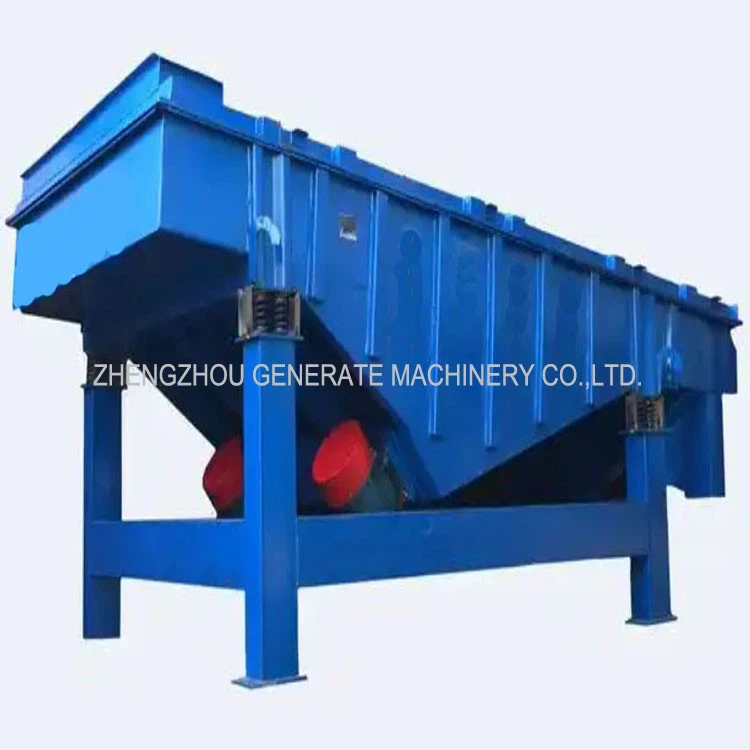
As a leading supplier of Linear Vibration Screens, we offer a wide range of products to meet the diverse needs of our clients. Our Linear Vibration Screen is designed with high-quality materials and advanced technology to ensure reliable performance and long service life. We also offer Linear Vibrating Sieve and Linear Vibration Sifter options, which are suitable for different applications and particle size ranges.
Our screens are available in various sizes and configurations, allowing us to customize the solution to your specific requirements. We also provide comprehensive after-sales service, including installation, maintenance, and technical support, to ensure that your screening process runs smoothly.
Contact Us for Procurement
If you are interested in our Linear Vibration Screens or have any questions about the particle size range and applications, please do not hesitate to contact us. Our team of experts will be happy to assist you in selecting the right screen for your needs and providing you with a competitive quote. We look forward to working with you and helping you improve your screening process.

References
- Perry, R. H., & Green, D. W. (Eds.). (2008). Perry's Chemical Engineers' Handbook. McGraw-Hill.
- Svarovsky, L. (1990). Solid-Liquid Separation. Butterworth-Heinemann.
- Tuzun, U. (2008). Handbook of Powder Technology. Elsevier.