


Hey there! As a supplier of incline belt conveyors, I often get asked about the conveyor belt surface texture for these types of conveyors. It's a crucial aspect that can significantly impact the performance and efficiency of the conveyor system. So, let's dive right in and explore what the ideal conveyor belt surface texture for an incline belt conveyor should be.
First off, why is the surface texture so important for an incline belt conveyor? Well, unlike a flat conveyor, an incline belt conveyor has to deal with gravity trying to pull the materials back down. The right surface texture helps to grip the materials, prevent slippage, and ensure smooth and reliable transportation up the incline.
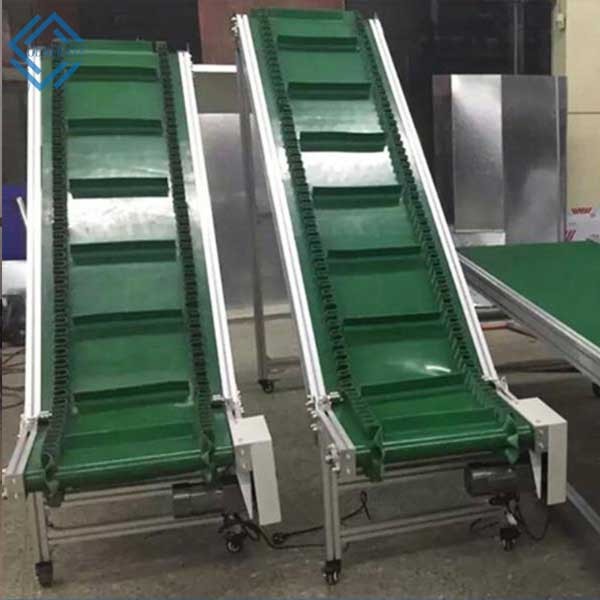
There are several types of surface textures that are commonly used for incline belt conveyors. One of the most popular ones is the chevron pattern. Chevron belts have a series of V-shaped ridges running across the width of the belt. These ridges act like little barriers that help to hold the materials in place as the belt moves up the incline. The angle and height of the chevrons can be adjusted depending on the specific application and the type of materials being conveyed. For example, if you're transporting heavy or large items, you might need a belt with taller and steeper chevrons for better grip.
Another common surface texture is the herringbone pattern. Herringbone belts have a pattern that looks like fishbones, with the ridges running at an angle to the direction of the belt movement. This pattern provides excellent traction and is particularly effective for conveying loose or granular materials. The herringbone pattern helps to channel the materials along the belt and prevent them from sliding off the sides.
Some incline belt conveyors also use a cleated surface. Cleats are raised sections on the belt that act as barriers to hold the materials in place. Cleats can be made of various materials, such as rubber or plastic, and can be customized in terms of height, shape, and spacing. They are especially useful for conveying materials that are prone to rolling or sliding, such as cans, bottles, or small parts.
In addition to these patterns, there are also smooth-surfaced belts that can be used for incline conveyors. Smooth belts are often used when the materials being conveyed are sensitive or require a gentle handling. However, they may not provide as much grip as patterned belts, so they are typically used for inclines with a relatively low angle.
When choosing the right surface texture for your incline belt conveyor, there are several factors to consider. First, you need to think about the type of materials you'll be conveying. Different materials have different characteristics, such as weight, size, shape, and surface friction. For example, if you're conveying wet or oily materials, you'll need a belt with a texture that can provide good grip even in slippery conditions.
The angle of the incline is another important factor. The steeper the incline, the more grip you'll need from the belt surface. If the incline is very steep, you might need to use a belt with a more aggressive texture, such as tall chevrons or large cleats.

The speed of the conveyor also plays a role. Higher speeds can increase the risk of slippage, so you'll need a belt with a texture that can maintain good traction at the operating speed.
Finally, you need to consider the environment in which the conveyor will be operating. If the conveyor is exposed to extreme temperatures, chemicals, or abrasion, you'll need a belt with a surface texture that can withstand these conditions.
As a supplier of incline belt conveyors, we offer a wide range of belt surface textures to meet the diverse needs of our customers. Whether you need a chevron belt for heavy-duty applications, a herringbone belt for loose materials, or a cleated belt for small parts, we can provide you with the right solution.
We also understand that every application is unique, so we offer custom belt solutions. Our team of experts can work with you to design and manufacture a conveyor belt with the perfect surface texture for your specific requirements. We use high-quality materials and advanced manufacturing techniques to ensure that our belts are durable, reliable, and perform at their best.
If you're in the market for an incline belt conveyor or need to replace the belt on your existing conveyor, we'd love to hear from you. Our experienced sales team can provide you with more information about our products, answer your questions, and help you choose the right conveyor belt surface texture for your application.
To learn more about our incline belt conveyor systems, check out our Incline Belt Conveyor System page. We also have a wide range of Incline Decline Belt Conveyor options available, as well as Steep Incline Conveyor Belt solutions for more challenging applications.
Don't hesitate to reach out to us if you have any questions or if you'd like to discuss your conveyor needs in more detail. We're here to help you find the best solution for your business.
In conclusion, the conveyor belt surface texture is a critical factor in the performance of an incline belt conveyor. By choosing the right surface texture, you can ensure that your conveyor operates smoothly, efficiently, and safely. Whether you need a patterned belt for better grip or a smooth belt for gentle handling, we have the expertise and products to meet your needs. So, get in touch with us today and let's start working on your incline belt conveyor solution.
References:
- Conveyor Belt Handbook, various industry publications
- Manufacturer's specifications for different conveyor belt types