


Sieving efficiency is a crucial metric when it comes to evaluating the performance of a Lab Vibro Sifter. As a supplier of Lab Vibro Sifters, I've witnessed firsthand the significance of understanding this concept for our customers in various industries, including pharmaceuticals, food processing, and chemical research. In this blog, I'll delve into what sieving efficiency means, how it's measured, and the factors that influence it in the context of our Lab Vibro Sifters.
What is Sieving Efficiency?
Sieving efficiency is a measure of how effectively a sieve separates particles of different sizes. It quantifies the degree to which the desired separation is achieved, indicating how well the sifter can distinguish between the particles that should pass through the sieve (undersize) and those that should be retained (oversize). In a perfect scenario, all undersize particles would pass through the sieve, and all oversize particles would be retained, resulting in 100% sieving efficiency. However, in reality, achieving this ideal is challenging due to various factors.
Mathematically, sieving efficiency (E) can be expressed as:
[ E = \frac{m_{u}}{m_{t}} \times 100% ]
where ( m_{u} ) is the mass of the undersize particles collected in the sieve pan, and ( m_{t} ) is the total mass of undersize particles present in the original sample.
Measuring Sieving Efficiency in a Lab Vibro Sifter
To measure sieving efficiency accurately, a standardized procedure is typically followed. First, a representative sample of the material to be sieved is prepared. The sample is then placed on the top sieve of the Lab Vibro Sifter, which consists of a stack of sieves with progressively smaller mesh sizes.
The sifter is then operated for a specific period, usually determined by industry standards or the requirements of the application. During this time, the sifter imparts vibrations to the sieves, causing the particles to move around and pass through the mesh openings. After the sieving process is complete, the mass of the particles retained on each sieve and in the bottom pan is measured.
By comparing the mass of the undersize particles collected in the pan with the total mass of undersize particles in the original sample, the sieving efficiency can be calculated. This measurement provides valuable insights into the performance of the sifter and helps identify any issues that may be affecting its efficiency.
Factors Affecting Sieving Efficiency in a Lab Vibro Sifter
Several factors can influence the sieving efficiency of a Lab Vibro Sifter. Understanding these factors is essential for optimizing the performance of the sifter and achieving the desired separation results.
Particle Size Distribution
The particle size distribution of the material being sieved plays a significant role in sieving efficiency. If the particles have a wide range of sizes, it can be more challenging to achieve a high sieving efficiency. This is because larger particles may block the mesh openings, preventing smaller particles from passing through. In such cases, pre - screening or using multiple sieves with different mesh sizes may be necessary to improve the efficiency.
Mesh Size and Opening Shape
The mesh size and opening shape of the sieve are critical factors. A sieve with a smaller mesh size will have smaller openings, which can retain more particles and potentially increase the sieving efficiency for separating fine particles. However, if the mesh size is too small, it may lead to clogging, reducing the overall efficiency. The shape of the mesh openings can also affect the sieving process, with square or rectangular openings generally providing better particle passage compared to circular openings.
Vibration Parameters
The vibration parameters of the Lab Vibro Sifter, such as amplitude, frequency, and vibration mode, have a direct impact on sieving efficiency. A higher amplitude can provide more energy to the particles, helping them to move through the sieve more easily. However, excessive amplitude may cause the particles to bounce off the sieve rather than passing through it. Similarly, the frequency of vibration needs to be optimized to ensure that the particles are agitated effectively without causing excessive wear on the sieve.
Material Properties
The properties of the material being sieved, such as its density, moisture content, and surface characteristics, can also affect sieving efficiency. For example, materials with high moisture content may tend to stick together, forming agglomerates that can block the sieve openings. In such cases, drying the material before sieving or using anti - sticking agents may be necessary.
Advantages of Our Lab Vibro Sifters in Terms of Sieving Efficiency
As a supplier of Lab Vibro Sifters, we take pride in offering products that are designed to maximize sieving efficiency. Our sifters are equipped with advanced vibration technology that allows for precise control of the vibration parameters. This ensures that the particles are agitated effectively, reducing the chances of clogging and improving the overall sieving performance.
We also offer a wide range of sieve mesh sizes and opening shapes to suit different applications. Our sieves are made from high - quality materials that are resistant to wear and corrosion, ensuring long - term durability and consistent sieving results.
In addition, our Lab Vibro Sifters are easy to operate and maintain. They come with user - friendly controls and a compact design, making them suitable for use in laboratories and small - scale production facilities.

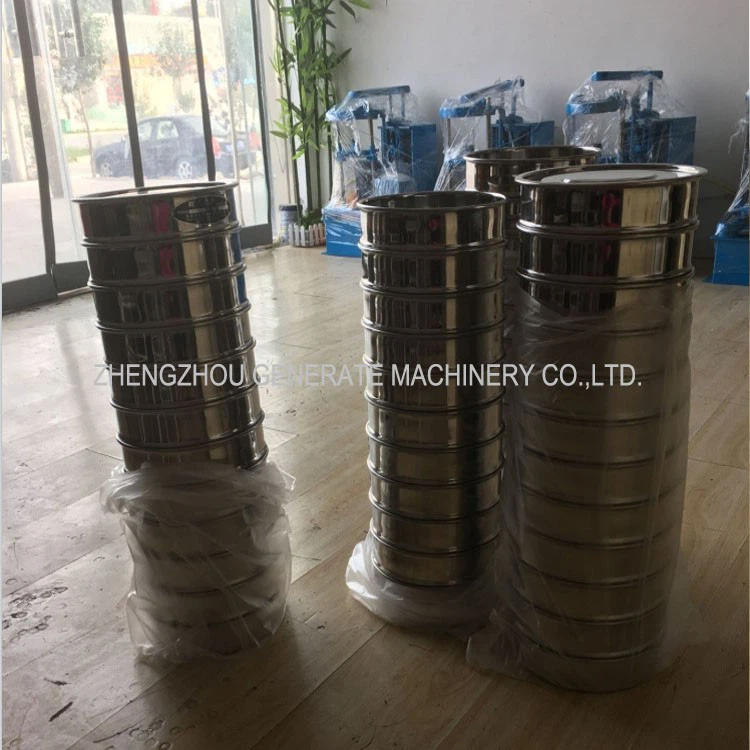
Applications of High - Efficiency Lab Vibro Sifters
High - efficiency Lab Vibro Sifters have a wide range of applications in various industries. In the pharmaceutical industry, they are used for particle size analysis of active pharmaceutical ingredients (APIs) and excipients, ensuring the quality and consistency of the final products. In the food processing industry, they are used for separating different sizes of food particles, such as flour, sugar, and spices, to improve the texture and quality of the products.
In the chemical research field, Lab Vibro Sifters are used for analyzing the particle size distribution of chemical compounds, which is crucial for understanding their properties and behavior. They are also used in the mining and metallurgy industries for separating different sizes of ores and minerals.
Conclusion
Sieving efficiency is a vital parameter for evaluating the performance of a Lab Vibro Sifter. By understanding what sieving efficiency means, how it's measured, and the factors that influence it, customers can make informed decisions when choosing a sifter for their applications.
As a supplier of Lab Vibro Sifters, we are committed to providing high - quality products that offer excellent sieving efficiency. Our Lab Test Vibrating Screen and Test Vibration Sieve are designed to meet the diverse needs of our customers in different industries.
If you are interested in learning more about our Lab Vibro Sifters or would like to discuss your specific requirements, please feel free to contact us. We look forward to the opportunity to work with you and help you achieve the best sieving results for your applications.
References
- Allen, T. (1997). Particle Size Measurement. Chapman & Hall.
- ASTM International. (2018). Standard Test Method for Particle - Size Analysis of Soils. ASTM D422 - 63(2018).
- Svarovsky, L. (1990). Solid - Liquid Separation. Butterworth - Heinemann.